724

Report a question

You cannot submit an empty report. Please add some details.

CRASH COURSE MOCK

The number of attempts remaining is 1

1 / 25

A 70-year-old patient presents complaining of persistent soreness and cracking at the corners of her mouth, along with intermittent numbness of the lower lip and chin. Symptoms are more noticeable during prolonged denture wear.

She has worn complete dentures for many years and reports that her mandibular denture feels loose and unstable, rocking during function. She maintains good denture hygiene and removes her dentures overnight.

Medical history includes type 2 diabetes mellitus and hypertension, both medically managed. She does not smoke and drinks alcohol occasionally.

On examination, there is bilateral erythema and fissuring at the oral commissures with mild maceration. The mandibular denture shows reduced stability and loss of support.

You decide to reline the mandibular denture to improve fit and support.
At review four weeks later, the patient reports that the corner-of-mouth irritation has significantly improved, but the lower lip and chin numbness persists.
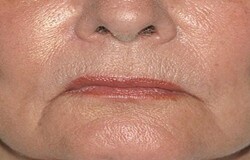
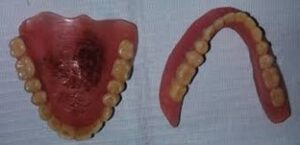
Q1. At the initial presentation, what was the PRIMARY factor to the angular cheilitis in this case?

2 / 25

A 70-year-old patient presents complaining of persistent soreness and cracking at the corners of her mouth, along with intermittent numbness of the lower lip and chin. Symptoms are more noticeable during prolonged denture wear.

She has worn complete dentures for many years and reports that her mandibular denture feels loose and unstable, rocking during function. She maintains good denture hygiene and removes her dentures overnight.

Medical history includes type 2 diabetes mellitus and hypertension, both medically managed. She does not smoke and drinks alcohol occasionally.

On examination, there is bilateral erythema and fissuring at the oral commissures with mild maceration. The mandibular denture shows reduced stability and loss of support.

You decide to reline the mandibular denture to improve fit and support.
At review four weeks later, the patient reports that the corner-of-mouth irritation has significantly improved, but the lower lip and chin numbness persists.

Q2. The persistent lower lip and chin numbness is MOST likely explained by which mechanism?

3 / 25

A 70-year-old patient presents complaining of persistent soreness and cracking at the corners of her mouth, along with intermittent numbness of the lower lip and chin. Symptoms are more noticeable during prolonged denture wear.

She has worn complete dentures for many years and reports that her mandibular denture feels loose and unstable, rocking during function. She maintains good denture hygiene and removes her dentures overnight.

Medical history includes type 2 diabetes mellitus and hypertension, both medically managed. She does not smoke and drinks alcohol occasionally.

On examination, there is bilateral erythema and fissuring at the oral commissures with mild maceration. The mandibular denture shows reduced stability and loss of support.

You decide to reline the mandibular denture to improve fit and support.
At review four weeks later, the patient reports that the corner-of-mouth irritation has significantly improved, but the lower lip and chin numbness persists.

Q3. Which diagnostic investigation is MOST appropriate to identify the cause of the ongoing sensory disturbance?

4 / 25

A 70-year-old patient presents complaining of persistent soreness and cracking at the corners of her mouth, along with intermittent numbness of the lower lip and chin. Symptoms are more noticeable during prolonged denture wear.

She has worn complete dentures for many years and reports that her mandibular denture feels loose and unstable, rocking during function. She maintains good denture hygiene and removes her dentures overnight.

Medical history includes type 2 diabetes mellitus and hypertension, both medically managed. She does not smoke and drinks alcohol occasionally.

On examination, there is bilateral erythema and fissuring at the oral commissures with mild maceration. The mandibular denture shows reduced stability and loss of support.

You decide to reline the mandibular denture to improve fit and support.
At review four weeks later, the patient reports that the corner-of-mouth irritation has significantly improved, but the lower lip and chin numbness persists.

Q4. What is INCORRECT regarding management?

5 / 25

A 70-year-old patient presents complaining of persistent soreness and cracking at the corners of her mouth, along with intermittent numbness of the lower lip and chin. Symptoms are more noticeable during prolonged denture wear.

She has worn complete dentures for many years and reports that her mandibular denture feels loose and unstable, rocking during function. She maintains good denture hygiene and removes her dentures overnight.

Medical history includes type 2 diabetes mellitus and hypertension, both medically managed. She does not smoke and drinks alcohol occasionally.

On examination, there is bilateral erythema and fissuring at the oral commissures with mild maceration. The mandibular denture shows reduced stability and loss of support.

You decide to reline the mandibular denture to improve fit and support.
At review four weeks later, the patient reports that the corner-of-mouth irritation has significantly improved, but the lower lip and chin numbness persists.

Q5. You decide to fabricate new complete dentures with an increase in vertical dimension of occlusion (VDO). Which statement is INCORRECT regarding assessment and recording of VDO?

6 / 25

You are preparing to perform extractions of the lower anterior and posterior teeth on both the right and left sides for Liam Patel, a 54-year-old male patient with a complex medical history. Liam’s records indicate controlled diabetes mellitus (HbA1c 6.8%), chronic kidney disease (CKD stage 3), and a recent myocardial infarction 6 months ago. He also reports sensitivity to sulfites, which has caused adverse reactions in the past. Liam weighs 70 kg and takes a variety of medications, including insulin, antihypertensives, and antiplatelet therapy (aspirin 100 mg daily).

During the consultation, Liam expresses anxiety about the procedure and mentions that his blood pressure has been unstable in recent months. He also states he experiences occasional episodes of dizziness and fatigue. Given his medical history and reported symptoms, the use of local anesthesia containing vasoconstrictors must be evaluated cautiously, balancing the risks of cardiovascular stress with the need for prolonged anesthesia and hemostasis during the extractions.

Your treatment plan involves using local anesthesia with careful selection of the anesthetic solution and the most appropriate injection techniques to ensure both safety and efficacy.

Q1: Considering the patient’s clinical case, which local anesthetic preparation offers the safest maximum dose/volume?

7 / 25

You are preparing to perform extractions of the lower anterior and posterior teeth on both the right and left sides for Liam Patel, a 54-year-old male patient with a complex medical history. Liam’s records indicate controlled diabetes mellitus (HbA1c 6.8%), chronic kidney disease (CKD stage 3), and a recent myocardial infarction 6 months ago. He also reports sensitivity to sulfites, which has caused adverse reactions in the past. Liam weighs 70 kg and takes a variety of medications, including insulin, antihypertensives, and antiplatelet therapy (aspirin 100 mg daily).

During the consultation, Liam expresses anxiety about the procedure and mentions that his blood pressure has been unstable in recent months. He also states he experiences occasional episodes of dizziness and fatigue. Given his medical history and reported symptoms, the use of local anesthesia containing vasoconstrictors must be evaluated cautiously, balancing the risks of cardiovascular stress with the need for prolonged anesthesia and hemostasis during the extractions.

Your treatment plan involves using local anesthesia with careful selection of the anesthetic solution and the most appropriate injection techniques to ensure both safety and efficacy.

Question 2: During the administration of an Inferior Alveolar Nerve Block (IANB), the black triangle on the needle hub is noted by the clinician. What is the primary reason for ensuring proper alignment of the triangle during the injection?

8 / 25

You are preparing to perform extractions of the lower anterior and posterior teeth on both the right and left sides for Liam Patel, a 54-year-old male patient with a complex medical history. Liam’s records indicate controlled diabetes mellitus (HbA1c 6.8%), chronic kidney disease (CKD stage 3), and a recent myocardial infarction 6 months ago. He also reports sensitivity to sulfites, which has caused adverse reactions in the past. Liam weighs 70 kg and takes a variety of medications, including insulin, antihypertensives, and antiplatelet therapy (aspirin 100 mg daily).

During the consultation, Liam expresses anxiety about the procedure and mentions that his blood pressure has been unstable in recent months. He also states he experiences occasional episodes of dizziness and fatigue. Given his medical history and reported symptoms, the use of local anesthesia containing vasoconstrictors must be evaluated cautiously, balancing the risks of cardiovascular stress with the need for prolonged anesthesia and hemostasis during the extractions.

Your treatment plan involves using local anesthesia with careful selection of the anesthetic solution and the most appropriate injection techniques to ensure both safety and efficacy.

Question 3. Based on the markings in the provided image, which colored point represents the most appropriate needle insertion site for an inferior alveolar nerve block?

9 / 25

You are preparing to perform extractions of the lower anterior and posterior teeth on both the right and left sides for Liam Patel, a 54-year-old male patient with a complex medical history. Liam’s records indicate controlled diabetes mellitus (HbA1c 6.8%), chronic kidney disease (CKD stage 3), and a recent myocardial infarction 6 months ago. He also reports sensitivity to sulfites, which has caused adverse reactions in the past. Liam weighs 70 kg and takes a variety of medications, including insulin, antihypertensives, and antiplatelet therapy (aspirin 100 mg daily).

During the consultation, Liam expresses anxiety about the procedure and mentions that his blood pressure has been unstable in recent months. He also states he experiences occasional episodes of dizziness and fatigue. Given his medical history and reported symptoms, the use of local anesthesia containing vasoconstrictors must be evaluated cautiously, balancing the risks of cardiovascular stress with the need for prolonged anesthesia and hemostasis during the extractions.

Your treatment plan involves using local anesthesia with careful selection of the anesthetic solution and the most appropriate injection techniques to ensure both safety and efficacy.

Q4. Which of the following is NOT a likely cause of Liam experiencing sudden dizziness and palpitations after the injection?

10 / 25

You are preparing to perform extractions of the lower anterior and posterior teeth on both the right and left sides for Liam Patel, a 54-year-old male patient with a complex medical history. Liam’s records indicate controlled diabetes mellitus (HbA1c 6.8%), chronic kidney disease (CKD stage 3), and a recent myocardial infarction 6 months ago. He also reports sensitivity to sulfites, which has caused adverse reactions in the past. Liam weighs 70 kg and takes a variety of medications, including insulin, antihypertensives, and antiplatelet therapy (aspirin 100 mg daily).

During the consultation, Liam expresses anxiety about the procedure and mentions that his blood pressure has been unstable in recent months. He also states he experiences occasional episodes of dizziness and fatigue. Given his medical history and reported symptoms, the use of local anesthesia containing vasoconstrictors must be evaluated cautiously, balancing the risks of cardiovascular stress with the need for prolonged anesthesia and hemostasis during the extractions.

Your treatment plan involves using local anesthesia with careful selection of the anesthetic solution and the most appropriate injection techniques to ensure both safety and efficacy.

Question 5: While extracting one of his lower teeth, Liam complains of inadequate anesthesia. What is the LEAST likely cause?

11 / 25

A 34-year-old female presents with a fractured porcelain-fused-to-metal (PFM) crown on tooth 21. The crown has fractured twice over the past three years. She has a Class I molar relationship with a very deep overbite (approximately 60%). There are no reported signs of nocturnal bruxism; however, clinical examination reveals significant wear facets on the mandibular incisors. During functional assessment, you observe that during protrusive mandibular movement, the posterior molars remain in heavy contact together with contact on the incisal edges of the maxillary and mandibular central incisors. You are planning to replace the fractured PFM crown and wish to address the underlying mechanical factors contributing to failure.

Q1. Based purely on visual assessment of the periodontal probe in the clinical photograph, what conclusion should be drawn regarding the labial shoulder width of the preparation?

12 / 25

A 34-year-old female presents with a fractured porcelain-fused-to-metal (PFM) crown on tooth 21. The crown has fractured twice over the past three years. She has a Class I molar relationship with a very deep overbite (approximately 60%). There are no reported signs of nocturnal bruxism; however, clinical examination reveals significant wear facets on the mandibular incisors. During functional assessment, you observe that during protrusive mandibular movement, the posterior molars remain in heavy contact together with contact on the incisal edges of the maxillary and mandibular central incisors. You are planning to replace the fractured PFM crown and wish to address the underlying mechanical factors contributing to failure.

Q2. You want to confirm that your lingual reduction follows natural tooth anatomy and provides sufficient space for the technician. Which method is MOST appropriate for this verification?

13 / 25

A 34-year-old female presents with a fractured porcelain-fused-to-metal (PFM) crown on tooth 21. The crown has fractured twice over the past three years. She has a Class I molar relationship with a very deep overbite (approximately 60%). There are no reported signs of nocturnal bruxism; however, clinical examination reveals significant wear facets on the mandibular incisors. During functional assessment, you observe that during protrusive mandibular movement, the posterior molars remain in heavy contact together with contact on the incisal edges of the maxillary and mandibular central incisors. You are planning to replace the fractured PFM crown and wish to address the underlying mechanical factors contributing to failure.

Q3. Which occlusal scheme should be STRICTLY AVOIDED when restoring a single maxillary central incisor with a PFM crown in a patient with an otherwise stable natural dentition?

14 / 25

A 34-year-old female presents with a fractured porcelain-fused-to-metal (PFM) crown on tooth 21. The crown has fractured twice over the past three years. She has a Class I molar relationship with a very deep overbite (approximately 60%). There are no reported signs of nocturnal bruxism; however, clinical examination reveals significant wear facets on the mandibular incisors. During functional assessment, you observe that during protrusive mandibular movement, the posterior molars remain in heavy contact together with contact on the incisal edges of the maxillary and mandibular central incisors. You are planning to replace the fractured PFM crown and wish to address the underlying mechanical factors contributing to failure.

Q4. Which material is MOST commonly used chairside today for fabricating a highly aesthetic, custom-made provisional crown in the anterior region?

15 / 25

A 34-year-old female presents with a fractured porcelain-fused-to-metal (PFM) crown on tooth 21. The crown has fractured twice over the past three years. She has a Class I molar relationship with a very deep overbite (approximately 60%). There are no reported signs of nocturnal bruxism; however, clinical examination reveals significant wear facets on the mandibular incisors. During functional assessment, you observe that during protrusive mandibular movement, the posterior molars remain in heavy contact together with contact on the incisal edges of the maxillary and mandibular central incisors. You are planning to replace the fractured PFM crown and wish to address the underlying mechanical factors contributing to failure.

Q5. The provisional crown has been successfully fabricated. Given that the final PFM crown will be cemented using a resin-based permanent cement, which temporary cement is MOST appropriate?

16 / 25

A 7-year-old girl, Chloe, is brought to your clinic by her father. Chloe was born with a unilateral cleft lip and palate (UCLP). She underwent lip repair at 5 months and palate repair at 11 months. Her father mentions she had a “grommet” operation last year due to hearing issues. She is currently being seen by a speech pathologist for “nasal-sounding” speech. Intra-orally, she is in the mixed dentition stage. You observe a posterior crossbite on the left side with significant maxillary arch constriction, and the left maxillary lateral incisor (22) is clinically absent. Her oral hygiene is poor, with generalized plaque-induced gingivitis and multiple incipient (white spot) lesions on the cervical margins of the primary molars. The father has class III dental malocclusion.

Q1. The father asks why the cleft lip occurred in the first place. Based on embryological development, you explain that a unilateral cleft lip specifically results from the failure of fusion between which two structures?

17 / 25

A 7-year-old girl, Chloe, is brought to your clinic by her father. Chloe was born with a unilateral cleft lip and palate (UCLP). She underwent lip repair at 5 months and palate repair at 11 months. Her father mentions she had a “grommet” operation last year due to hearing issues. She is currently being seen by a speech pathologist for “nasal-sounding” speech. Intra-orally, she is in the mixed dentition stage. You observe a posterior crossbite on the left side with significant maxillary arch constriction, and the left maxillary lateral incisor (22) is clinically absent. Her oral hygiene is poor, with generalized plaque-induced gingivitis and multiple incipient (white spot) lesions on the cervical margins of the primary molars. The father has class III dental malocclusion.

Q2. Radiographic examination reveals the absence of the 22 tooth bud. Which of the following is the most accurate clinical consideration regarding the management of this specific dental finding within the context of the alveolar cleft?

18 / 25

A 7-year-old girl, Chloe, is brought to your clinic by her father. Chloe was born with a unilateral cleft lip and palate (UCLP). She underwent lip repair at 5 months and palate repair at 11 months. Her father mentions she had a “grommet” operation last year due to hearing issues. She is currently being seen by a speech pathologist for “nasal-sounding” speech. Intra-orally, she is in the mixed dentition stage. You observe a posterior crossbite on the left side with significant maxillary arch constriction, and the left maxillary lateral incisor (22) is clinically absent. Her oral hygiene is poor, with generalized plaque-induced gingivitis and multiple incipient (white spot) lesions on the cervical margins of the primary molars. The father has class III dental malocclusion.

Q3. Chloe’s father is confused about why her upper jaw looks “narrow” and her teeth do not line up. What is the primary cause of the posterior crossbite and maxillary growth deficiency in this patient?

19 / 25

A 7-year-old girl, Chloe, is brought to your clinic by her father. Chloe was born with a unilateral cleft lip and palate (UCLP). She underwent lip repair at 5 months and palate repair at 11 months. Her father mentions she had a “grommet” operation last year due to hearing issues. She is currently being seen by a speech pathologist for “nasal-sounding” speech. Intra-orally, she is in the mixed dentition stage. You observe a posterior crossbite on the left side with significant maxillary arch constriction, and the left maxillary lateral incisor (22) is clinically absent. Her oral hygiene is poor, with generalized plaque-induced gingivitis and multiple incipient (white spot) lesions on the cervical margins of the primary molars. The father has class III dental malocclusion.

Q4. Considering Chloe’s mixed dentition stage, her orthodontic needs, and her current caries status, what is the most appropriate sequence for her immediate management?

20 / 25

A 7-year-old girl, Chloe, is brought to your clinic by her father. Chloe was born with a unilateral cleft lip and palate (UCLP). She underwent lip repair at 5 months and palate repair at 11 months. Her father mentions she had a “grommet” operation last year due to hearing issues. She is currently being seen by a speech pathologist for “nasal-sounding” speech. Intra-orally, she is in the mixed dentition stage. You observe a posterior crossbite on the left side with significant maxillary arch constriction, and the left maxillary lateral incisor (22) is clinically absent. Her oral hygiene is poor, with generalized plaque-induced gingivitis and multiple incipient (white spot) lesions on the cervical margins of the primary molars. The father has class III dental malocclusion.

Q5. Chloe’s father asks if her palate surgery was performed at the “right time” because of her current speech issues. According to Australian clinical standards, what is the maximum preferred age for primary palate repair to optimise velopharyngeal function?

21 / 25

Sarah, a 31-year-old G2P1 (second pregnancy), is at 26 weeks gestation. She presents with a painful, 1.5 cm, friable, pedunculated mass on the left maxillary gingiva and a deep carious lesion on the 26.
Medical History:

  • Gestational Diabetes (GDM): Poorly controlled; HbA1c recently recorded at 8.2%.
  • Pre-gestational Hypertension: Managed with Methyldopa.
  • Current Symptoms: Chronic xerostomia and “burning” in the posterior throat.
  • Social: Lives in a rural area with limited access to specialist care.

While performing a vitality test on the 26, Sarah suddenly becomes pale, diaphoretic (sweating), and confused. Her pulse is rapid and thready.

Q1. Given Sarah’s systemic profile (GDM, Hypertension, and Pregnancy), which physiological mechanism is the MOST likely primary driver for the rapid proliferation of the gingival mass?

22 / 25

Sarah, a 31-year-old G2P1 (second pregnancy), is at 26 weeks gestation. She presents with a painful, 1.5 cm, friable, pedunculated mass on the left maxillary gingiva and a deep carious lesion on the 26.
Medical History:

  • Gestational Diabetes (GDM): Poorly controlled; HbA1c recently recorded at 8.2%.
  • Pre-gestational Hypertension: Managed with Methyldopa.
  • Current Symptoms: Chronic xerostomia and “burning” in the posterior throat.
  • Social: Lives in a rural area with limited access to specialist care.

While performing a vitality test on the 26, Sarah suddenly becomes pale, diaphoretic (sweating), and confused. Her pulse is rapid and thready.

Q2. As Sarah feels faint shortly after the dental chair is fully reclined, what is the MOST likely diagnosis?

23 / 25

Sarah, a 31-year-old G2P1 (second pregnancy), is at 26 weeks gestation. She presents with a painful, 1.5 cm, friable, pedunculated mass on the left maxillary gingiva and a deep carious lesion on the 26.
Medical History:

  • Gestational Diabetes (GDM): Poorly controlled; HbA1c recently recorded at 8.2%.
  • Pre-gestational Hypertension: Managed with Methyldopa.
  • Current Symptoms: Chronic xerostomia and “burning” in the posterior throat.
  • Social: Lives in a rural area with limited access to specialist care.

While performing a vitality test on the 26, Sarah suddenly becomes pale, diaphoretic (sweating), and confused. Her pulse is rapid and thready.

Q3. What is the MOST appropriate positioning to prevent recurrence of this episode during treatment?


24 / 25

Sarah, a 31-year-old G2P1 (second pregnancy), is at 26 weeks gestation. She presents with a painful, 1.5 cm, friable, pedunculated mass on the left maxillary gingiva and a deep carious lesion on the 26.
Medical History:

  • Gestational Diabetes (GDM): Poorly controlled; HbA1c recently recorded at 8.2%.
  • Pre-gestational Hypertension: Managed with Methyldopa.
  • Current Symptoms: Chronic xerostomia and “burning” in the posterior throat.
  • Social: Lives in a rural area with limited access to specialist care.

While performing a vitality test on the 26, Sarah suddenly becomes pale, diaphoretic (sweating), and confused. Her pulse is rapid and thready.

Q4. Considering her medical history and current gestational age (26 weeks), what is the MOST significant risk if you decide to delay the surgical excision of the pyogenic granuloma until after she gives birth?


25 / 25

Sarah, a 31-year-old G2P1 (second pregnancy), is at 26 weeks gestation. She presents with a painful, 1.5 cm, friable, pedunculated mass on the left maxillary gingiva and a deep carious lesion on the 26.
Medical History:

  • Gestational Diabetes (GDM): Poorly controlled; HbA1c recently recorded at 8.2%.
  • Pre-gestational Hypertension: Managed with Methyldopa.
  • Current Symptoms: Chronic xerostomia and “burning” in the posterior throat.
  • Social: Lives in a rural area with limited access to specialist care.

While performing a vitality test on the 26, Sarah suddenly becomes pale, diaphoretic (sweating), and confused. Her pulse is rapid and thready.

Q5. She requires a diagnostic radiograph of a painful molar. According to Australian radiation safety standards, what level of fetal radiation exposure is considered NON-teratogenic?


Your score is